How to engineer viral growth with referrals and affiliates

Virality was never a strategy, it was faith.

We believed that if we built something good enough, people would talk about it, the press would pick it up, users would share it, and growth would just happen.

And for a while, it did.

I’ve seen this firsthand at Pinterest, Descript, and Indiegogo. Like many companies in the 2010s, we benefited from the classic forms of virality: social sharing, network effects, and PR.

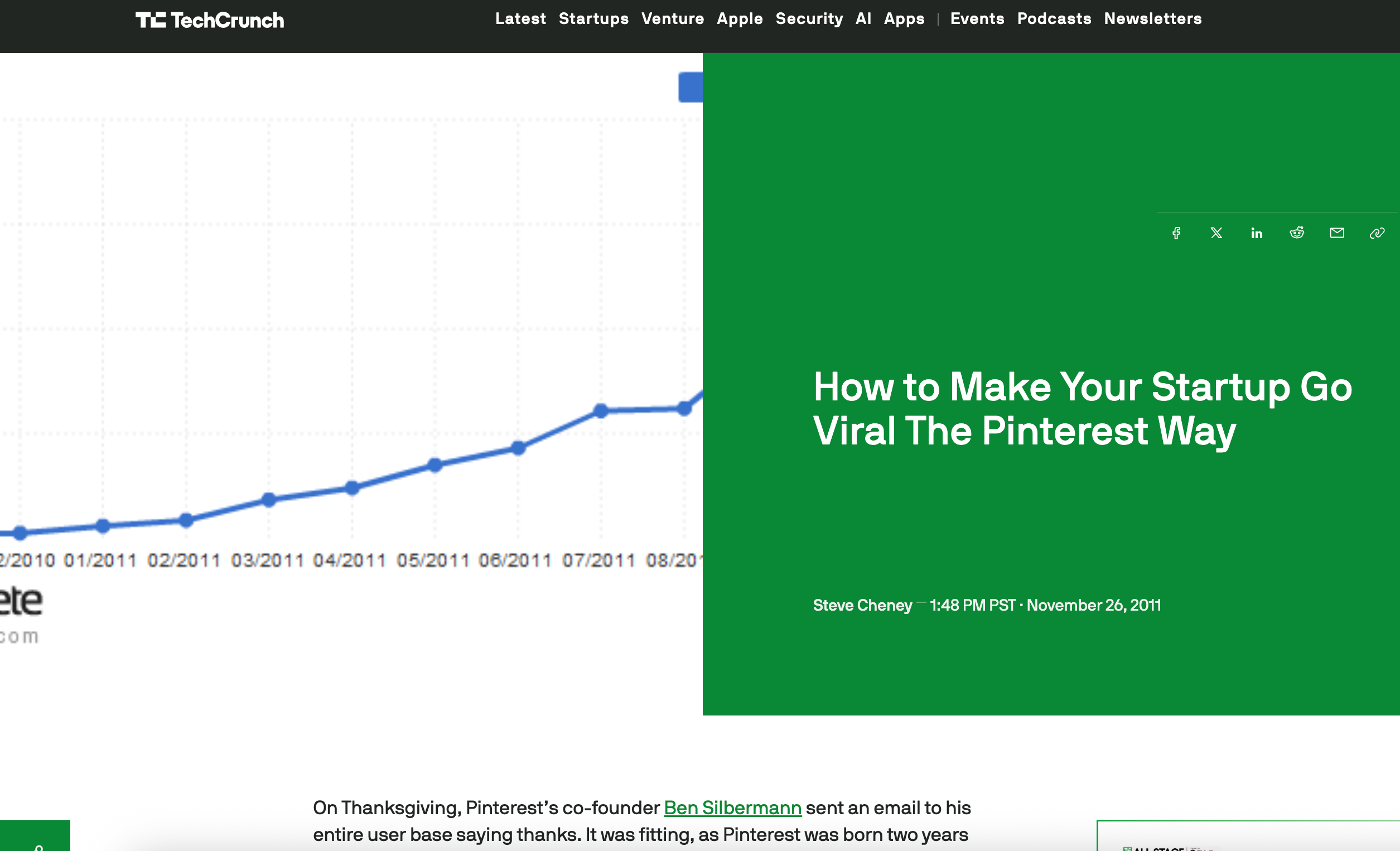
This 2011 Techcrunch article outlining the hype spikes that grew Pinterest from 40k to 3.2 million monthly unique visitors.

The problem with these channels is that they’re unpredictable and impossible to replicate on demand. The PR hype eventually dies down, and network effects plateau. And when they do, you’re left with a growth channel you can’t control.

That’s the reality for most companies these days.

Earned media doesn’t work anymore. The market is saturated, with too many apps vying for people’s attention. Cultural “heists” like BeReal and Clubhouse drive explosive word of mouth, but struggle to retain users.

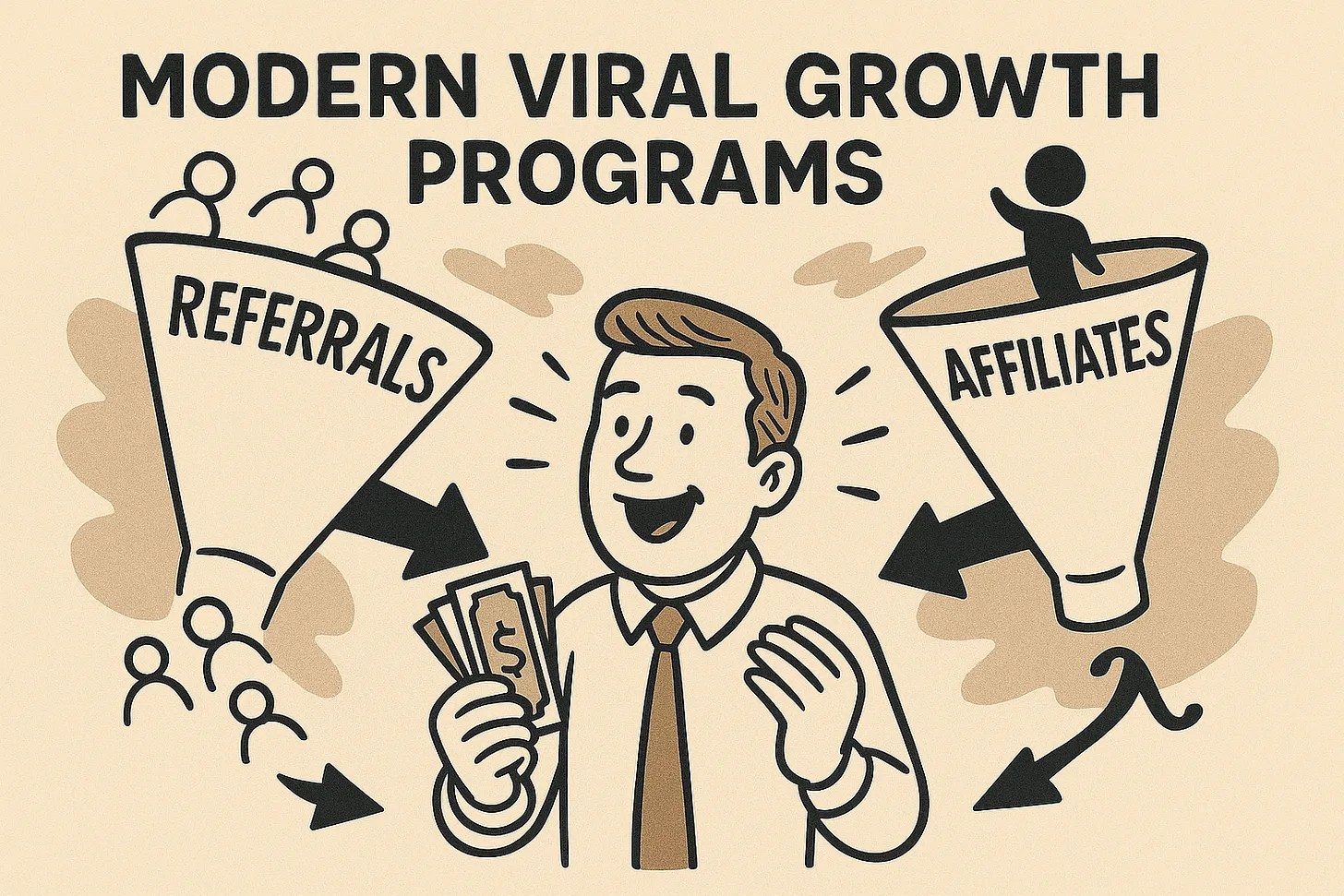
Traditional viral growth delivers traffic, not real traction. Attention might be there, but intent is not. Meanwhile, referrals and affiliate programs are quietly doing what virality never could: scale with engineer-like precision.

Why referrals and affiliates are thriving

Trust is the new viral growth engine.

Affiliates and influencers now impact up to 88% of purchase decisions, whether users discover the product through them or use them to validate a choice. Trust doesn’t just drive adoption, it also improves the quality of your leads. Customers acquired through referrals have 16% higher LTV, according to Wharton’s research.

The reason is simple, and very human: these programs rely on someone you personally trust telling you to do something. They’re like word of mouth, except that they’re structured and have very clear attribution.

That structure is what makes referrals and affiliates so powerful and allows us to treat them as a performance channel. You can track CAC, test incentives, and model payback, just like with paid ads. The economics are embedded in the system, meaning that you’re building ROI into the program itself through incentive design.

Except that, unlike ads, you’re not buying attention and low-intent users. Because these programs sit at the very end of AARRR, Referral, they don’t pull in low-intent traffic. They bring in people who look like your best users.

The growth playbook is dead. So what should you do instead?

“Sandy, what is the ideal growth strategy for my company?”

I’ve heard this question at least three times in the past two weeks alone. Founders think all growth best practices have changed because of AI: everything is broken, channels don’t work anymore, and they need a new perfect playbook to follow.

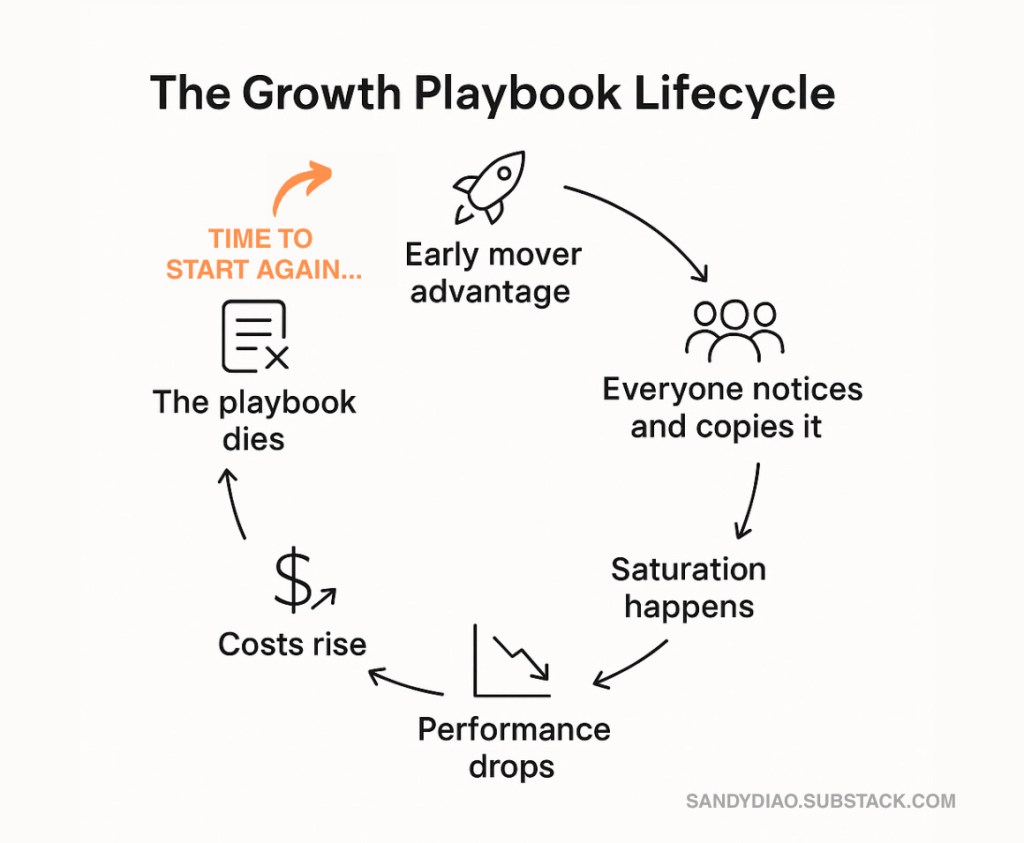
But there is no one-size-fits-all growth playbook anymore. Not because AI has broken it, but because growth playbooks were always built to break. Every channel that has ever delivered outsized results followed the same cycle:

Early mover advantage creates massive returns > everyone notices and copies it > saturation happens > performance drops > costs rise > the playbook dies.

The growth playbook lifecycle ends when it becomes over-copied and saturated.
  • In the early 2010s, tiny keyword tweaks would shoot you to the top of search results on the App Store. Then tools like Sensor Tower made this playbook visible to everyone, turning it from a growth hack into table stakes.
  • Between 2014 and 2020, the average CPM for Facebook ads rose from $2.50 to over $14. What started as a goldmine became another overpriced channel.
  • The same goes for influencer marketing, onboarding flows, email drips, push notifications… you name it.

From 2010 to 2020, growth was about finding the next hidden gem and going all in on it. Now, that cycle moves faster than ever. Here’s what has changed, and how companies can still win today.

To read the full post, visit Growth Notes

More growth essays from Sandy Diao – starting today

Hey everyone, it’s Sandy- it’s been a while since I’ve shared a full-fledged post here with you. I’ve decided to pick up my pencil (figuratively) again and start writing. This has been inspired by a lot of the recent conversations I’ve been having with founders and companies, and I realized that there’s a lot of information and stories I repeat that would make sense to write down.

I’m migrating my writing over to my new Substack, Growth Notes by Sandy Diao. My goal is to publish high-quality growth-focused content, for free. There, you’ll find the full version of my latest write up, “How the AI growth funnel is changing: acquisition and onboarding are blending.” Acquisition and onboarding are merging, and this article I wrote shows you how the best growth teams are designing for it.

I hope you’ll find these topics as interesting as I do in writing them. See you over on Substack!

[Prompt template] AI ad copy generator

How to use this Meta ad copy generator prompt

  1. Paste the prompt below into your favorite LLM writer. I recommend Claude.ai.
  2. Fill out in the key context details:
    • Product & audience – Describe all possible product positioning points, details about the target audience, and main selling features. The template below has an example using Descript.
    • Brand/style tone – Describe your company’s brand writing tone (e.g., witty, professional, casual). The template includes an example.
    • Share 2-3 examples – Add examples of other high performing ad copy from your previous campaigns or from competitors. Use Meta Ads Library to directly pull copy examples from your competitors.
  3. Get a list of 10 results and use the best ones in your Meta campaign.

Prompt Template – Facebook & Instagram Ad Copy

[GOAL]

Act as an experienced Meta ad copywriter and draft ten variants of ad copy promoting a product. The ad copy should be persuasive and appealing to the target audience to make them likely to click the ad and make a purchase. The ad will show up in Instagram and Facebook feeds, and the copy must also meet these copy requirements: primary text: 125 characters; headline: 40 characters. The primary text is where most of the customers will stop scrolling to read, and the headline is a call to action text that shows up at the bottom of the ad with the CTA button “Learn more” next to it.

[OUTPUT]

For each ad copy variant, return it as a section with a number label count. Then in two rows after, include the copy labeled as “primary text” and “headline”. Order them from strongest to least strong idea based on our goals.

[EXAMPLES]

Here are some examples of Meta ad copy that have performed well for other products, and we can learn from their messaging and positioning to inform our approach:

  • [Example 1]
  • [Example 2]
  • [Example 3]

[PRODUCT/AUDIENCE]

About the product: Descript is an all-in-one audio and video editing software made for individual content creators and businesses alike. This ad should primarily target English speaking North American audiences. The product stands out as being one of the first text-based editing tools, which allows you to edit a podcast or video as easily as a word doc. Some of the top features to consider include highly accurate transcripts, filler word removal, automatic subtitles, multi-track video recording, and one-click background noise removal.

[BRAND/STYLE]

The company’s brand tone and style tends to be witty and subversively humorous. We try not to use too many technical terms and try to be casual yet professional and also relatable. The ad should not be overly salesly, and avoid using jargon sales and marketing gimmicks.

What Is Growth Marketing? a Condensed Yet Comprehensive Guide for Beginners

Growth marketing has become a buzzword in the world of marketing. It is a data-driven approach that focuses on growing a business by acquiring and retaining customers. In this comprehensive guide, we will explore what growth marketing is, its benefits, different growth strategies, measuring its impact, leveraging data and analytics, utilizing automation, creating a successful growth plan, building an effective growth team, and tips for beginner growth marketers.

Introduction to Growth Marketing

Growth marketing is a holistic approach to marketing that aims to drive measurable growth for a business. Unlike traditional marketing, which focuses on branding and awareness, growth marketing is focused on driving results and achieving specific business goals. It is a data-driven approach that requires constant experimentation and optimization to achieve growth.

One of the key principles of growth marketing is the concept of the “growth funnel.” The growth funnel consists of different stages, including acquisition, activation, retention, revenue, and referral, or AARRR for short. The goal of growth marketing is to optimize each stage of the funnel to drive growth.

Let’s dive deeper into the concept of the growth funnel. The first stage of the funnel is acquisition, which involves attracting new customers to your business. This can be done through various channels such as search engine optimization (SEO), social media marketing, content marketing, and paid advertising. By targeting the right audience and effectively communicating your value proposition, you can drive traffic to your website or physical store.

Once you have acquired new customers, the next stage is activation. This is where you engage with your customers and encourage them to take a desired action, such as signing up for a newsletter, creating an account, or making a purchase. By providing a seamless user experience and offering incentives, you can increase the likelihood of activation and convert visitors into active users or customers.

Retention is the third stage of the growth funnel and focuses on keeping your existing customers engaged and coming back for more. This can be achieved through personalized communication, loyalty programs, exceptional customer service, and continuous product improvements. By building strong relationships with your customers and delivering value consistently, you can increase customer loyalty and reduce churn.

The fourth stage of the growth funnel is revenue. This is where you monetize your customer base and generate revenue for your business. This can be done through various revenue streams such as product sales, subscriptions, advertising, or partnerships. By analyzing customer behavior and optimizing your pricing strategy, you can maximize revenue and increase profitability.

The final stage of the growth funnel is referral. This is where your existing customers become advocates for your brand and refer new customers to your business. Word-of-mouth marketing is a powerful tool for growth, as people trust recommendations from their friends and family. By providing exceptional experiences and incentivizing referrals, you can turn your customers into brand ambassadors and tap into their networks for new customer acquisition.

Growth marketing is a data-driven approach that aims to drive measurable growth for a business. By optimizing each stage of the growth funnel, from acquisition to referral, businesses can achieve sustainable growth and outperform their competitors. It requires constant experimentation, analysis, and optimization to uncover new opportunities and drive results. So, if you’re looking to take your marketing efforts to the next level and achieve significant growth, consider adopting a growth marketing mindset.

Benefits of Growth Marketing

Growth marketing offers several benefits for businesses. Firstly, it allows businesses to focus on measurable results and ROI. By constantly testing and optimizing different strategies, growth marketers can achieve better results and drive growth for the business.

For example, a growth marketer might conduct A/B testing on different landing page designs to determine which one generates more conversions. By analyzing the data and making data-driven decisions, the marketer can optimize the landing page to increase the conversion rate, ultimately driving more revenue for the business.

Secondly, growth marketing is a scalable approach. It allows businesses to scale their growth efforts by leveraging data, automation, and technology. By automating repetitive tasks and utilizing data and analytics, growth marketers can focus on high-impact activities that drive growth.

Imagine a business that wants to expand its customer base. A growth marketer can use customer segmentation and predictive analytics to identify the most promising target audience. By automating the process of reaching out to these potential customers through personalized email campaigns, the marketer can efficiently scale the business’s growth efforts.

Furthermore, growth marketing embraces the power of technology and data. Growth marketers can leverage various tools and platforms to gather insights and make data-driven decisions. By analyzing user behavior, demographics, and preferences, growth marketers can identify opportunities for growth and tailor their marketing strategies accordingly.

Lastly, growth marketing is a customer-centric approach. It focuses on understanding the customer journey and delivering a personalized and seamless experience. By understanding customer behavior and preferences, growth marketers can tailor their marketing efforts to drive customer acquisition and retention.

For instance, a growth marketer might use customer feedback and data analysis to identify pain points in the customer journey. By addressing these pain points and providing personalized solutions, the marketer can enhance the overall customer experience, leading to increased customer satisfaction and loyalty.

Growth marketing offers numerous benefits for businesses. It enables businesses to focus on measurable results and ROI, scale their growth efforts through data and automation, and deliver a customer-centric experience. By adopting growth marketing strategies, businesses can drive sustainable growth and stay ahead in today’s competitive market.

Understanding the Different Growth Strategies

There are different growth strategies that businesses can implement to drive growth. These strategies include:

  1. Product-led growth: This strategy focuses on creating a product that is inherently viral or easy to spread through word-of-mouth. By focusing on product scalability and customer experience, businesses can drive organic growth.
  2. Content marketing: Content marketing involves creating valuable and relevant content to attract and engage customers. By providing valuable information and insights, businesses can build trust and drive customer acquisition.
  3. Paid advertising: Paid advertising involves promoting products or services through paid channels such as social media ads, search engine ads, or display ads. By targeting the right audience and optimizing ad campaigns, businesses can drive customer acquisition.
  4. Partnerships and collaborations: Collaborating with other businesses or influencers can help businesses reach new audiences and drive customer acquisition. By leveraging the reach and influence of partners, businesses can drive growth.
  5. Referral programs: Referral programs incentivize existing customers to refer new customers to the business. By rewarding customers for referrals, businesses can drive customer acquisition and leverage the power of word-of-mouth marketing.

These are just a few examples of growth strategies. The key is to find the right strategies that align with the business goals and target audience.

Measuring the Impact of Growth Marketing

Measuring the impact of growth marketing is crucial to determine the success and effectiveness of the strategies implemented. There are several key metrics that businesses can track to measure the impact of growth marketing, including:

  • Customer acquisition cost (CAC): CAC measures the cost of acquiring a new customer. By analyzing CAC, businesses can determine the effectiveness of their acquisition strategies and optimize their marketing budget.
  • Lifetime value (LTV): LTV measures the total revenue generated by a customer throughout their relationship with the business. By calculating LTV, businesses can determine the value of acquiring and retaining customers.
  • Retention rate: Retention rate measures the percentage of customers who continue to use the product or service over time. By improving retention rate, businesses can increase customer lifetime value and drive growth.
  • Conversion rate: Conversion rate measures the percentage of website visitors or leads that convert into customers. By optimizing conversion rate, businesses can improve their acquisition strategies and drive growth.

By tracking these metrics and analyzing the data, businesses can make data-driven decisions and optimize their growth marketing efforts.

Leveraging Data and Analytics to Improve Growth

Data and analytics play a crucial role in growth marketing. By leveraging data, businesses can gain valuable insights into customer behavior, preferences, and trends. This data can then be used to optimize marketing campaigns, personalize customer experiences, and identify growth opportunities.

Businesses can utilize various tools and technologies to collect and analyze data, such as web analytics tools, customer relationship management (CRM) systems, and marketing automation platforms. By integrating these tools, businesses can track customer interactions, segment their audience, and deliver personalized marketing messages.

In addition to data collection and analysis, businesses can also implement A/B testing and experimentation to optimize their growth strategies. By testing different variations of marketing campaigns or website elements, businesses can identify what works best for their audience and drive growth.

Utilizing Automation for Growth

Automation plays a crucial role in growth marketing. By automating repetitive tasks and processes, businesses can save time and resources, allowing them to focus on high-impact activities that drive growth. Automation also enables businesses to deliver personalized and timely messaging to their audience.

There are various areas where businesses can utilize automation for growth, including email marketing, lead nurturing, social media scheduling, and customer support. By implementing marketing automation platforms, businesses can streamline their marketing efforts and deliver a seamless customer experience.

Creating a Successful Growth Plan

To create a successful growth plan, businesses need to develop a clear strategy and set specific goals. The growth plan should outline the target audience, growth strategies to be implemented, key metrics to track, and the timeline for achieving growth goals.

It is important to regularly review and assess the growth plan to ensure it is aligned with the changing market dynamics and customer needs. By continuously evaluating and adjusting the growth plan, businesses can stay agile and adapt to the evolving landscape.

Building an Effective Growth Team

Building an effective growth team is essential for driving growth. The growth team should consist of individuals with diverse skill sets, including data analysts, marketers, developers, and designers. Collaboration and cross-functional teamwork are key to success.

It is important to foster a culture of experimentation and learning within the growth team. By encouraging testing, feedback, and knowledge sharing, businesses can drive innovation and optimize their growth strategies.

Tips for Beginner Growth Marketers

For beginner growth marketers, it is important to embrace a growth mindset and be open to experimentation. Here are some tips for beginner growth marketers:

  • Start with a clear goal: Define the specific goals you want to achieve with your growth marketing efforts.
  • Understand your audience: Gain a deep understanding of your target audience and their needs.
  • Test and iterate: Constantly test different strategies, analyze the results, and iterate based on the data.
  • Keep learning: Stay up-to-date with the latest trends and best practices in growth marketing.
  • Collaborate: Seek feedback and collaborate with your team to generate new ideas and strategies.

By following these tips and staying committed to continuous learning and improvement, beginner growth marketers can pave the way for success in the field of growth marketing.

Conclusion

Growth marketing is a data-driven approach that focuses on driving measurable growth for businesses. By implementing the right strategies, utilizing data and analytics, leveraging automation, and building a strong growth team, businesses can achieve sustainable growth and stay ahead in the competitive landscape.

For beginners in the field of growth marketing, it is important to embrace a growth mindset, stay curious, and be open to experimentation. With constant learning and a commitment to driving results, beginner growth marketers can make a significant impact on the growth of a business.
Text-to-creation: the universal form of creation in the past, present & future

What is text-to-creation? Text-to-creation refers to the category of technologies that takes text as an input, and produces multimedia that span text, audio, images, or video as an output.

– Sandy Diao

Text is the universal form of creation

This statement may not be immediately obvious, but it is perhaps the most logical explanation for the widespread consumer adoption of LLM (large language model)-powered experiences that we are seeing today. As of writing, OpenAI has publicly disclosed that their ChatGPT technology has well over 100 million monthly active users. One third of Gen Z, millennials, and Gen X have tried generative AI technologies (Statistica 2023). The market for AI has grown to $6.6 billion this year, and is expected to triple to $21 billion by the end of the decade (Statistica 2023). It’s important to note that we are only scratching the surface with these numbers when measuring the impact of AI-only tools. When we consider the possibilities of using AI to supercharge industries such as pharmaceuticals ($1.4 trillion) or entertainment ($717 billion), the numbers become truly incomprehensible. So now, the question we all naturally want to understand is what happens from here and what opportunities lie ahead? To answer this question, we must look at how we got here to understand how our behaviors will evolve next.

Text is the primary medium of daily communication

To provide context on how I’ve developed my point of view, I’ve worked behind the scenes to launch several AI products. During my time at Indiegogo, I helped hundreds of founders launch hardware products that incorporated early versions of edge computing on consumer devices, such as security cameras and emotional companion robots. I’ve also worked at Pinterest and Meta, whose advertising platforms allowed end-users to access AI ad delivery through machine-learned audience models for conversion optimization. Currently, I work on growth at Descript, where we’ve built a text-based video editing software powered by generative AI models across transcription, voice synthesis, audio generation, and more.

At first glance, Descript may seem like a surface-level UX change to a video editor. However, when you try to understand why it works, you’ll start to realize that it’s not just a coincidence that Descript is as easily learned and accepted by content creators and businesses as it is. Beyond Descript, the common theme across all types of creation is that we create with text to communicate. Most communication happens asynchronously, and the way we do that is via text – handwritten, emailed, scripted, documented, in blog posts, books, engravings, and the list goes on and on.

When you layer on what’s happening in the landscape of adoption of ChatGPT and consider the incredible versatility and historical importance of the written language, it becomes clear that text is truly the foundation upon which our modern forms of communication are built. When we consider the incredible versatility and historical importance of written language, and layer on what’s happening in the landscape of ChatGPT adoption, it becomes clear that text is truly the foundation upon which our modern world is built. Text-based prompts through a chat interface are the initial form factor that allows us to talk to computers in a way that we’ve never been able to before.

Text can be used to create more than just text

In addition to text-based prompts that generate text-based outcomes, there are many other forms of text-to-creation that are becoming prevalent today. For instance, text-to-speech tools based on transcription models are being utilized in everything from virtual assistants and smart home devices to audiobooks and podcasts.

Text-to-image technology is also on the rise and has the potential to revolutionize everything from advertising and marketing to film and television. This technology can produce realistic, high-quality images from text descriptions, eliminating the need for expensive photo shoots and video productions, making it easier and more affordable for creators to bring their visions to life.

Lastly, text-to-expanded text creation is another area of development that could become even more powerful. As artificial intelligence and machine learning continue to improve, we may soon be able to create prompts with minimal context that are fine-tuned to create results indistinguishable from the work of humans. Imagine being able to write a book in precisely your own style and intent by providing just a log line. This could have far-reaching implications for industries such as journalism, advertising, and content creation, fundamentally altering the way we produce and consume written content.

The emergence of text-to-creation was inevitable

Considering text as the medium of creation throughout history makes a lot of sense. When thinking about the earliest forms of writing, one might envision cave paintings and hieroglyphics from history classes. Fast forward to the computing age, where humans use text to communicate, record, and create through typing. The written word remains the foundation of stories, systems of belief, and education, spanning from religious texts and philosophical treatises to novels and scientific papers.

In recent times, new forms of text-based creativity have emerged. The novel, which rose to prominence in the 18th and 19th centuries, marked a significant departure from traditional forms of storytelling and introduced new techniques for character development and plot construction. In the 20th century, the internet and digital technologies opened up new avenues for text creation, including blogs, social media, e-books, and online journalism.

Today, we continue to tell stories and share information primarily through text, even as we create short and long-form videos, explainer videos on YouTube, and self-created and hosted curricula across over 600 million blogs as of this year (Web Tribunal 2023). In many cases, even videos and movies originate as scripts. And while not all videos require manual text tagging, it’s worth considering the effort required to classify the topics and information in those that do.

The ideas that are expressed in written mediums originate in the minds of writers and creators before they are put onto paper. In order to effectively share and communicate these ideas with others, the text needs to be well-crafted and nearly finalized. Recently, LLMs have given us the ability to communicate sequentially and iteratively, much like natural language conversations. However, just as there are good and bad conversations based on the context provided and the clarity of instructions, there are also more and less effective ways to prompt an LLM. The effectiveness of text-based communication depends on the communicator’s abilities. In this new world of accessible LLMs, it is important to learn how to turn our thoughts into clear communication using natural language.

Now, tools like Descript enable users to create a custom voice model with just a few minutes of training data. In the future, some of these models could be instant and hidden within app experiences. Completing a computer task could be as easy as speaking to it in natural language and asking it to perform a task.

The emerging role of natural language speech

An important development in this area will be enabling speech, which is the most common form of natural language delivery today, to be converted into text so that we can use it for iterative creation. Significant progress has already been made in converting human speech to text through speech-to-text transcription models, such as Whisper, Google Cloud’s Speech-to-text, and Amazon Transcribe. Let’s take a look at the most important moments in the evolution of digitizing natural language speech by decade:

  • 1950s: One of the earliest examples of text-to-speech technology can be traced back to Bell Labs, who introduced the Audrey system. While the technology was still in its infancy, it laid the groundwork for the development of modern text-to-speech systems.
  • 1960s: Physicist John Larry Kelly, Jr used an IBM 704 computer to synthesize speech.
  • 1970s: Itakura developed the line spectral pairs method. MUSA, a stand-alone speech synthesis algorithm used to read Italian out loud, was also released during this year.
  • 1980s: Sun Electronics released Stratovox, a shooting-style arcade game that shook the video game world. DECtalk, the standalone acoustic-mechanical speech machine, was built, and Steve Jobs created NeXT, a system that was developed by Trillium Sound Research.
  • 1990s: Ann Syrdal at AT&T Bell Laboratories developed a female speech synthesizer voice. Engineers worked to make voices more natural-sounding.
  • 2000s: Quality and standards for synthesized speech became a working issue for developers. This coalesced in researchers using a common speech dataset along with deeper research into additional vectors of creation, such as emotions.
  • 2010s: OpenAI released GPT-1, the first iteration of their generative language model. Researchers at the University of North Carolina at Chapel Hill introduced the AttnGAN model, which uses attention mechanisms to generate images from text descriptions. Since then, there have been numerous advancements in this field, with companies like OpenAI and NVIDIA developing their own image-generating models.
  • 2020s: Open AI has continued to refine and develop the technology, culminating in the release of GPT-3 in 2020. With the ability to generate human-like text, GPT-3 has opened up new possibilities for text-to-text creation. In 2022, Open AI released ChatGPT as a public beta, and then released an updated model in 2023 that takes image inputs.

Voice-to-creation is also text-based creation

Before we draw the firm conclusion that text underlies universal creation, we need to consider how voice-based creation fits into the picture. In the past few years, we have used our voices to activate AI assistants on devices powered by Alexa and Siri. In a 2018 interview with Vox, tech entrepreneur and investor Marc Andreessen predicted that “voice is going to be the primary user interface for the majority of computing over the next 10 years.” This prediction may still come true, but for that to happen, we need to understand that the engine powering voice interfaces is still based on text-to-speech models.

Voice-enabled technologies such as virtual assistants, like Amazon’s Alexa or Apple’s Siri, rely on text-to-speech models to convert spoken language into written language. This written language is then processed by natural language processing algorithms that help the technology understand and respond to the user’s request. Even the most advanced virtual assistants on the market, including Google Assistant and Amazon’s Alexa, are powered by text-to-speech models that are trained on vast amounts of written text. This is also true for other forms of media creation – the intermediate step is almost always text-to-creation at this time.

What happens next?

So, how do we evolve with text-to-creation from here? There are two key areas that will be innovated in in order to supercharge our ability to create with text:

  1. More context as inputs, such as voice, vision, and motion. Relying solely on text can limit a model’s ability to infer all necessary context. While many models already support image inputs, we also need to incorporate video and other forms of real-world capture to enhance the results of our text-based prompts, and to extend into more creative fields that require understanding the nuances of emotion, intent, and preferences.
  2. Edge computing will allow models to tap into individually unique and private data inputs that fine tune models to generate powerrful outputs that we may have never imagined.

While we can’t predict exactly how text creation will evolve in the future, it is clear that new technologies will inevitably be created to capture more context and compute with more personalized sources of data. There’s a universe of outputs that power use cases that we probably can’t even imagine yet, and I’m excited to see what those are.

Lensa app review: Are Lensa AI avatars worth the cost in 2023?

What is the Lensa app?

Lensa AI is a magic avatar generator app for iOS and Android that lets you create colorful, custom AI portraits of yourself. It takes less than 30 minutes to get a collection of 50+ avatars that are customized based on selfie images that you upload to the app.

First, my Lensa app review

Rating: 3 out of 5.

3 out of 5 stars. The avatars weren’t bad, but also not great. 96% of the images were mediocre at best. However, I did like 2 out of the 50 images that I paid $3.99 for. Considering that it’s a 4K resolution piece of digital art hat I can now use as an avatar, I suppose it could have been worse. That’s about $2 for each digital photo, so I can’t say that I was totally scammed.

My favorite generated avatar.
My second favorite generated avatar.

There are other cartoon-ify avatar generators that I’ve had better experiences with, such as Wonder. If you’re not interested in spending money on these yet, I recommend taking a look free apps with limited styles, like Snow or Beautycam.

Getting the avatars set up

In all, it took about 20 minutes to get from app installation to a folder of 50 avatars. It was about 5 minutes to set up, configure styles, and select selfies as training inputs. From there, it took approximately 15 minutes to generate the avatars.

22 styles across three categories of realism.

Here’s a step-by-step look at how I created my avatars with the Lensa app:

  1. Sign up for a free 7-day trial to access the Magic Avatars feature.
  2. Choose some styles. You can pick from 22 styles across the categories Essential, Art, and Time Machine.
  3. Upload 10-20 selfies. Online guides suggest avoiding any face coverings, including hands that might be touching the face, since it impacts the training.
  4. Choose to pay $3.99 for 50 generated images (10 styles) or $6.99 for 100 generated images. 50 sounded like a lot, so I went with 50 (though afterwards seeing how wildly in accurate and gross some of the photos were, I wish I had more options to choose from).
  5. Hit the “generate” button, and it takes between 15-20 minutes for the images to finish.
  6. You’ll see your pack generated, which you can download all at once in 4k or hi-res files. You can also download files individually.

Best and worst styles, according to my results

Before I share the rank ordering, I wanted to share that the biggest problem I observed in the worst style packs was that I think Lensa is probably missing training data for Asian faces. I found the more creative styles, such as Iridescent, Pop, and Comics to be grossly incorrect.

Stylish pack – looks very generic. Don’t know how this was trained using my selfies.
Comics style – doesn’t look like me. feature proportions are off, like the eye shapes.
Anime style – doesn’t look like me. feature proportions are off, especially the eyes.

Most accurate style: Cosmic

This was a bit surprising, since I assumed “Cosmic” would be a bit more abstract. But these avatars looked more like me than any of the other styles.

Most aesthetic: Iridescent

While the first two images don’t look like me at all, they’re still high quality, ethereal styles.

Most creative: Pop

Aside from the bottom right square that is just a cleaned up version of the selfie I submitted, these were unique, art-like renditions.

Most generically bad: Anime

These are so generic that you’d think I just randomly found these pictures while searching online. There are no indications that they were generated from my photos.

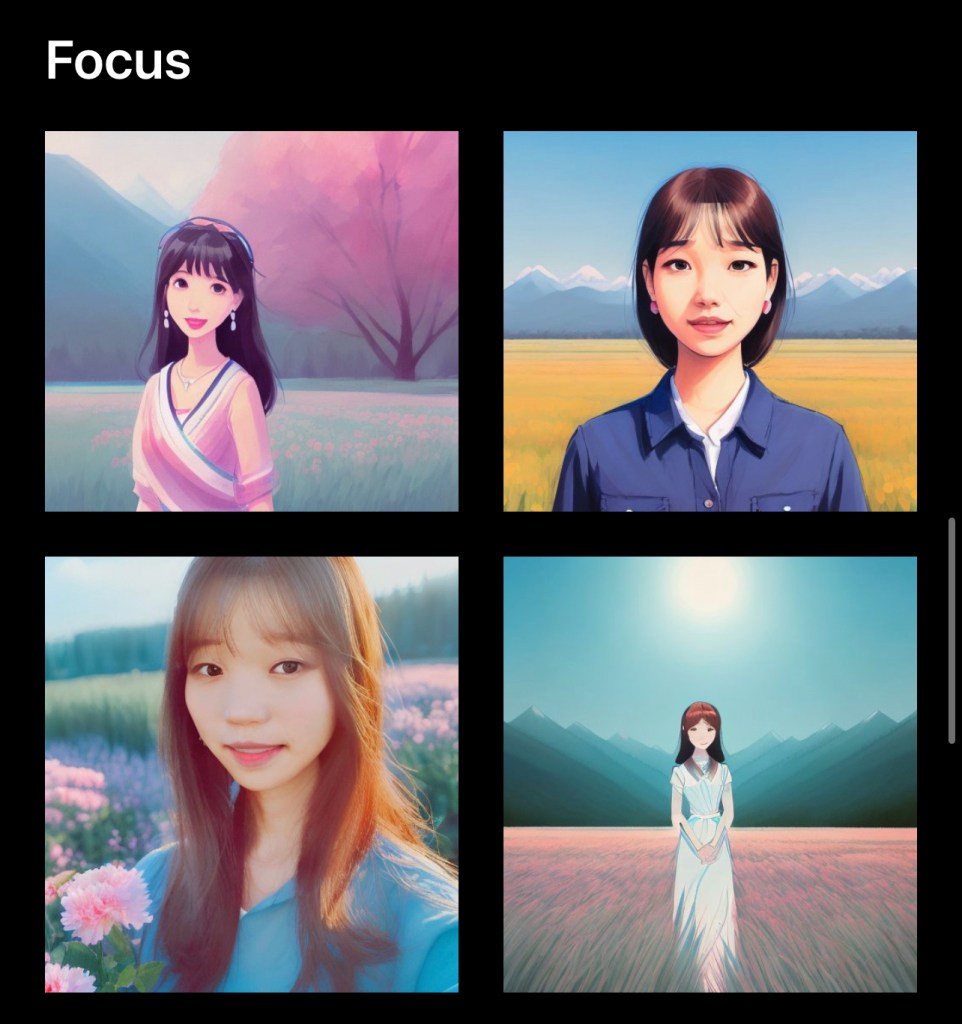
Most inaccurate: Focus

None of these look like me. Maybe slightly if I squint, but I look at it and feel terrified at how bizarre these are.

Don’t forget to check the privacy policy and the terms of use

Before you rush to download the app and start generating avatars, keep in mind that as consumers, we’re entering a whole new era of privacy and data rights management around the images that we entrust with generative AI companies. If this is something that you care about, make sure you understand the details in their privacy policy and terms of use to understand what the app does with your selfies, data, and generated images.


Lensa app review: Are Lensa AI avatars worth the cost in 2023?

What is the Lensa app?

Lensa AI is a magic avatar generator app for iOS and Android that lets you create colorful, custom AI portraits of yourself. It takes less than 30 minutes to get a collection of 50+ avatars that are customized based on selfie images that you upload to the app.

How much does the Lensa app cost?

First, my Lensa app review

Rating: 3 out of 5.

3 out of 5 stars. The avatars were not bad, but not great. 96% of the images were mediocre at best. However, I did like 2 out of the 50 images that I paid $3.99 for. Considering that it’s a 4K resolution piece of digital art hat I can now use as an avatar, I suppose it could have been worse. That’s about $2 for each digital photo, so I can’t say that I was totally scammed.

My favorite generated avatar.
My second favorite generated avatar.

There are other cartoon-ify avatar generators that I’ve had better experiences with, such as Wonder. If you’re not interested in spending money on these yet, I recommend taking a look free apps with limited styles, like Snow or Beautycam.

Getting the avatars set up

In all, it took about 20 minutes to get from app installation to a folder of 50 avatars. It was about 5 minutes to set up, configure styles, and select selfies as training inputs. From there, it took approximately 15 minutes to generate the avatars.

22 styles across three categories of realism.

Here’s a step-by-step look at how I created my avatars with the Lensa app:

  1. Sign up for a free 7-day trial to access the Magic Avatars feature.
  2. Choose some styles. You can pick from 22 styles across the categories Essential, Art, and Time Machine.
  3. Upload 10-20 selfies. Online guides suggest avoiding any face coverings, including hands that might be touching the face, since it impacts the training.
  4. Choose to pay $3.99 for 50 generated images (10 styles) or $6.99 for 100 generated images. 50 Sounded like a lot, so I went with 50 (though afterwards seeing how wildly in accurate and gross some of the photos were, I wish I had more options to choose from).
  5. Hit the “generate” button, and it takes between 15-20 minutes for the images to finish.
  6. You’ll see your pack generated, which you can download all at once in 4k or hi-res files. You can also download files individually.

Best and worst styles, according to my results

Before I share the rank ordering, I wanted to share that the biggest problem I observed in the worst style packs was that I think Lensa is probably missing training data for Asian faces. I found the more creative styles, such as Iridescent, Pop, and Comics to be grossly incorrect.

Stylish pack – looks very generic. Don’t know how this was trained using my selfies.
Comics style – doesn’t look like me. feature proportions are off, like the eye shapes.
Anime style – doesn’t look like me. feature proportions are off, especially the eyes.

Most accurate style: Cosmic

This was a bit surprising, since I assumed “Cosmic” would be a bit more abstract. But these avatars looked more like me than any of the other styles.

Most aesthetic: Iridescent

While the first two images don’t look like me at all, they’re still high quality, ethereal styles.

Most creative: Pop

Aside from the bottom right square that is just a cleaned up version of the selfie I submitted, these were unique, art-like renditions.

Most generically bad: Anime

These are so generic that you’d think I just randomly found these pictures while searching online. There are no indications that they were generated from my photos.

Most inaccurate: Focus

None of these look like me. Maybe slightly if I squint, but I look at it and feel terrified at how bizarre these are.

Don’t forget to check the privacy policy and the terms of use

Before you rush to download the app and start generating avatars, keep in mind that as consumers, we’re entering a whole new era of privacy and data rights management around the images that we entrust with generative AI companies. If this is something that you care about, make sure you understand the details in their privacy policy and terms of use to understand what the app does with your selfies, data, and generated images.


How to use AI writing tools to your advantage

Artificial intelligence (AI) has revolutionized the way we live and work, and writing is no exception. With the help of AI-powered writing tools, writers can generate ideas, improve their writing skills, and automate time-consuming writing tasks. Even prior to the advent of ChatGPT and other conversational AI bots that now act as personal writing assistants, several companies have for months and even year, developed some of the leading AI writing tools available today such as Writesonic, Jasper (formerly known as Jarvis.ai), Grammarly, ProWritingAid, Copysmith, Rytr, Articoolo, and more. These tools use machine learning algorithms to analyze large amounts of data, learn from it, and generate human-like content as the output. In this article, we’ll explore how you can use AI writing tools to your advantage, and which tools are the best fit for practical parts of the writing process.

What is AI Writing?

AI writing is a technology that uses natural language processing (NLP) algorithms and machine learning (ML) models to generate content without human intervention. AI writing software are usually designed to help with specific writing tasks, such as generating blog articles, email newsletters, social media posts, and even creative writing.

AI writing tools have proven to be a game-changer for many creators and businesses. For instance, the team at HubSpot has used AI writing tools like Writesonic to create dozens of social media posts in just a few minutes. Content creators have also creatively applied AI writing tools – in 2020, a group of digital marketers used GPT-3 to generate several blog posts that received thousands of views and shares. The tool’s ability to generate content quickly and efficiently helped them reach a broader audience, resulting in increased traffic and engagement. Even traditional authors have used AI writing tools to generate outlines and ideas for their books. A popular tool for this is Articoolo, which allows writers to input a topic or keyword and generates a full-length article on that topic in just a few seconds.

Can an AI Write My Essay?

Yes, in theory and practice, AI can write your entire essay (and I don’t even want to think about what teachers and professors are doing now to grade students’ work with this as a much more accessible technology). Still, while AI writing tools can be useful in generating content, they’re not yet advanced enough to write an entire essay without any human input. Students and other essay writers will still need to guide the writing as much as possible to ensure that it addresses the objectives of the essay.

Where essay writers can use AI tools most effectively today will be in assisting with idea generation, improving writing, and providing suggestions for revisions. For example, tools like Grammarly may provide suggestions for essay structure or offer ways to improve the essay’s clarity, style, or grammar. Another creative application could also be to use AI to search for research sources to support an essay’s arguments.

Can an AI Write a Script?

AI writing tools can assist in scriptwriting by providing suggestions for character dialogue, plot development, and even story arcs. While an AI writing tool probably can’t write an entire Oscar award-winning script on its own, they can be useful in providing ideas and improving the writing process.

The entertainment industry has already started using AI writing tools to generate scripts for movies, TV shows, and video games. In 2016, a short film titled Sunspring was created using an AI writing tool called Benjamin. Benjamin, which was developed by filmmaker Ross Goodwin, used a recurrent neural network to analyze hundreds of science fiction screenplays and generate a script for the film. Even media giants like Netflix has been using AI writing tools like LDA (Latent Dirichlet Allocation) to analyze viewer data and generate script ideas for its original shows. The streaming giant also used an AI writing tool called AIVA to generate a musical score for one of its shows.

How Do I Create Content for My Blog Using AI?

Creating content for a blog can be a time-consuming process, especially if you’re looking to produce high-quality, engaging content consistently. Fortunately, AI writing tools have made it easier to create blog content quickly and efficiently.

One popular AI writing tool for blogs is Jasper. Jasper offers a variety of features, including content ideation, writing, and editing. For example, if you’re struggling to come up with a blog post idea, you can use their content ideation feature to generate multiple ideas based on a keyword or topic. The tool uses machine learning to analyze thousands of blog posts and suggest ideas that will perform well.

AI writing tools can also help with writing SEO-optimized blog articles. AI tools can help improve the quality of your blog content by suggesting relevant keywords, optimizing meta descriptions and titles, and analyzing the content’s readability. SurferSEO is an AI-powered SEO writing tool that uses machine learning algorithms to analyze search engine results and suggest relevant keywords and phrases for your blog posts. It can also provide feedback on the length of the content, its structure, and readability. Clearscope is another tool that uses AI to analyze your content, and the app will suggest keywords and topics that can help improve its relevance and ranking on search engines. It’s like a real-time grader for SEO.

Practical Ways to Start Using AI Writing Tools

Now that we’ve covered the basics of AI writing tools, let’s discuss how you can use them to your advantage. Here are some tips for using AI writing tools effectively:

  1. Use AI writing tools like Writesonic or Jasper to generate ideas quickly. These AI-powered tools can analyze your keyword or topic and provide you with content ideas that you can build upon.
  2. Refine your writing style and grammar using Grammarly or ProWritingAid. These tools use AI to scan your writing for errors and provide feedback to help you improve your writing.
  3. Automate your writing process using tools like Copysmith or Rytr. These tools can generate content for you quickly, freeing up time to focus on other tasks. Copysmith can create high-quality product descriptions, blog intros and outros, and more, while Rytr can help you create blog posts, social media posts, or even ad copy.
  4. Experiment with new writing styles and genres using tools like Articoolo or Writesonic. Articoolo can create high-quality articles based on your keywords, while Writesonic can generate content for social media, ads, blogs, and more.

While AI writing tools like the ones mentioned above are not capable of writing an entire book or essay without any human input, they can certainly assist writers in generating ideas and creating content quickly and efficiently. By using these tools to your advantage, you can improve your writing, save time, and even have fun exploring new creative ideas.


The untold story of startup success: building a company starts as a sidegig

It’s a common misconception that successful startups are born out of a single-minded focus and an all-consuming passion. We tell the story of founders who “make the leap” and give up everything – sell their house, move into a small apartment, work out of a garage – and end up believing that it’s 100% in or else there’s no hope for building a successful company. In reality, many of the most successful startups were started as side projects by founders who were full-time students or had day jobs.

Take Airbnb, for example – it was founded by three friends who were struggling to pay rent in San Francisco. They started renting out air mattresses in their apartment to local conference attendees, and the idea eventually grew into a billion-dollar company.

Even take Slack as another example, started as an internal tool for a gaming company called Tiny Speck. The founders realized that their tool could be useful for other companies, and Slack was born.

You might be surprised that Google falls into this pattern as well. Google, as one of the largest technology companies in the world, was started as a research project by Larry Page and Sergey Brin while they were PhD students at Stanford.

The point is that so many of the successful startups you know and love weren’t created as full-time endeavors. They were born out of a need or a passion that founders pursued in their evenings and weekends, often while working full-time jobs.

This contrarian view is important for traditional venture capitalists to consider, because it challenges the conventional wisdom that founders are only good if they have full commitment. That becomes true later, but if we didn’t have the explorers who were willing to build in their evenings, then we wouldn’t have a lot of the innovative companies that we have today. We tend to look for startup founders with single-minded focus and a team that is 100% committed to building a product. But the reality is that many successful startups start out as side gigs.

I’m really excited to look for startups that don’t fit the mold of a traditional full-time company. With trends like “The Great Betrayal” and full-time work looking less attractive, I’m willing to bet that we’ll see a huge wave of part-time entrepreneurs, some of whom will merely dabble, others becoming solopreneurs, but also some will build the the next biggest companies. You never know where the next billion-dollar idea may come from.

30 software legends that started part-time

There’s a much, much longer list that isn’t captured on the Internet, but for starters, here’s a list of 30 software companies that you’ve probably heard of that were started as side projects:

  1. Microsoft: Bill Gates and Paul Allen started Microsoft while they were still in high school, and continued to work on the company as a part-time venture while attending college.
  2. Amazon: Jeff Bezos started Amazon as an online bookseller while working as a senior vice president at a hedge fund.
  3. Google: Larry Page and Sergey Brin started working on the search engine that would become Google while they were Ph.D. students at Stanford University.
  4. Slack: Stewart Butterfield and his team started working on the team communication tool while they were still working on a different project, and continued to work on Slack as a side project until it became a full-time venture.
  5. Dell: Michael Dell started building personal computers in his college dorm room as a part-time venture before eventually quitting school to start Dell Inc. full-time.
  6. Apple – Steve Jobs and Steve Wozniak created the first Apple computer in Jobs’ parents’ garage while working full-time jobs.
  7. Airbnb – Founders Brian Chesky, Nathan Blecharczyk, and Joe Gebbia started renting out air mattresses in their apartment to conference attendees as a way to make extra money.
  8. WhatsApp – Co-founders Jan Koum and Brian Acton created WhatsApp while working as engineers at Yahoo.
  9. Dropbox – Drew Houston started developing the first version of Dropbox while working full-time at a startup called Accolade.
  10. Evernote – Phil Libin, Stepan Pachikov, and Dave Engberg started Evernote as a part-time project while working at other companies.
  11. Hootsuite – Ryan Holmes started Hootsuite as a side project while running a digital agency.
  12. Wunderlist – Christian Reber started developing Wunderlist while working full-time as a designer.
  13. Twitter – Jack Dorsey, Biz Stone, and Evan Williams created Twitter while working on another startup called Odeo.
  14. Atlassian – Mike Cannon-Brookes and Scott Farquhar started Atlassian while studying at the University of New South Wales.
  15. WordPress – Matt Mullenweg started developing WordPress as a side project while working as a consultant.
  16. Trello – Joel Spolsky and Michael Pryor created Trello as a way to manage their own projects more efficiently.
  17. MailChimp – Ben Chestnut started MailChimp as a side project while running a web design company.
  18. Salesforce: Marc Benioff started Salesforce as a part-time venture while he was still working as an executive at Oracle.
  19. Hubspot: Brian Halligan and Dharmesh Shah started Hubspot as a part-time venture while they were still professors at MIT.
  20. Asana: Justin Rosenstein and Dustin Moskovitz started Asana as a part-time project while they were still working at Facebook.
  21. Freshdesk: Girish Mathrubootham started Freshdesk as a part-time project while he was still working as a product manager at Zoho.
  22. Basecamp: Jason Fried and David Heinemeier Hansson started Basecamp as a part-time venture while they were still working as consultants.
  23. Airtable: Howie Liu, Andrew Ofstad, and Emmett Nicholas started Airtable as a part-time project while they were still working at various tech companies.
  24. Canva: Melanie Perkins, Cliff Obrecht, and Cameron Adams started Canva as a part-time project while they were still students.
  25. Pipedrive: Timo Rein and Davide De Guzman started Pipedrive as a part-time venture while they were still working as consultants.
  26. Heroku – James Lindenbaum, Adam Wiggins, and Orion Henry started Heroku as a part-time project while working at different companies.
  27. Typeform: Robert Finn and David Okuniev started Typeform as a part-time project while they were still working as designers.
  28. Adobe – John Warnock and Chuck Geschke started Adobe as a part-time project while working at Xerox.
  29. Red Hat – Bob Young and Marc Ewing started Red Hat as a part-time project while working at Cornell University.
  30. Grammarly – Alex Shevchenko and Max Lytvyn started Grammarly as a part-time project while studying at UC Berkeley.