Virality was never a strategy, it was faith.
We believed that if we built something good enough, people would talk about it, the press would pick it up, users would share it, and growth would just happen.
And for a while, it did.
I’ve seen this firsthand at Pinterest, Descript, and Indiegogo. Like many companies in the 2010s, we benefited from the classic forms of virality: social sharing, network effects, and PR.
The problem with these channels is that they’re unpredictable and impossible to replicate on demand. The PR hype eventually dies down, and network effects plateau. And when they do, you’re left with a growth channel you can’t control.
That’s the reality for most companies these days.
Earned media doesn’t work anymore. The market is saturated, with too many apps vying for people’s attention. Cultural “heists” like BeReal and Clubhouse drive explosive word of mouth, but struggle to retain users.
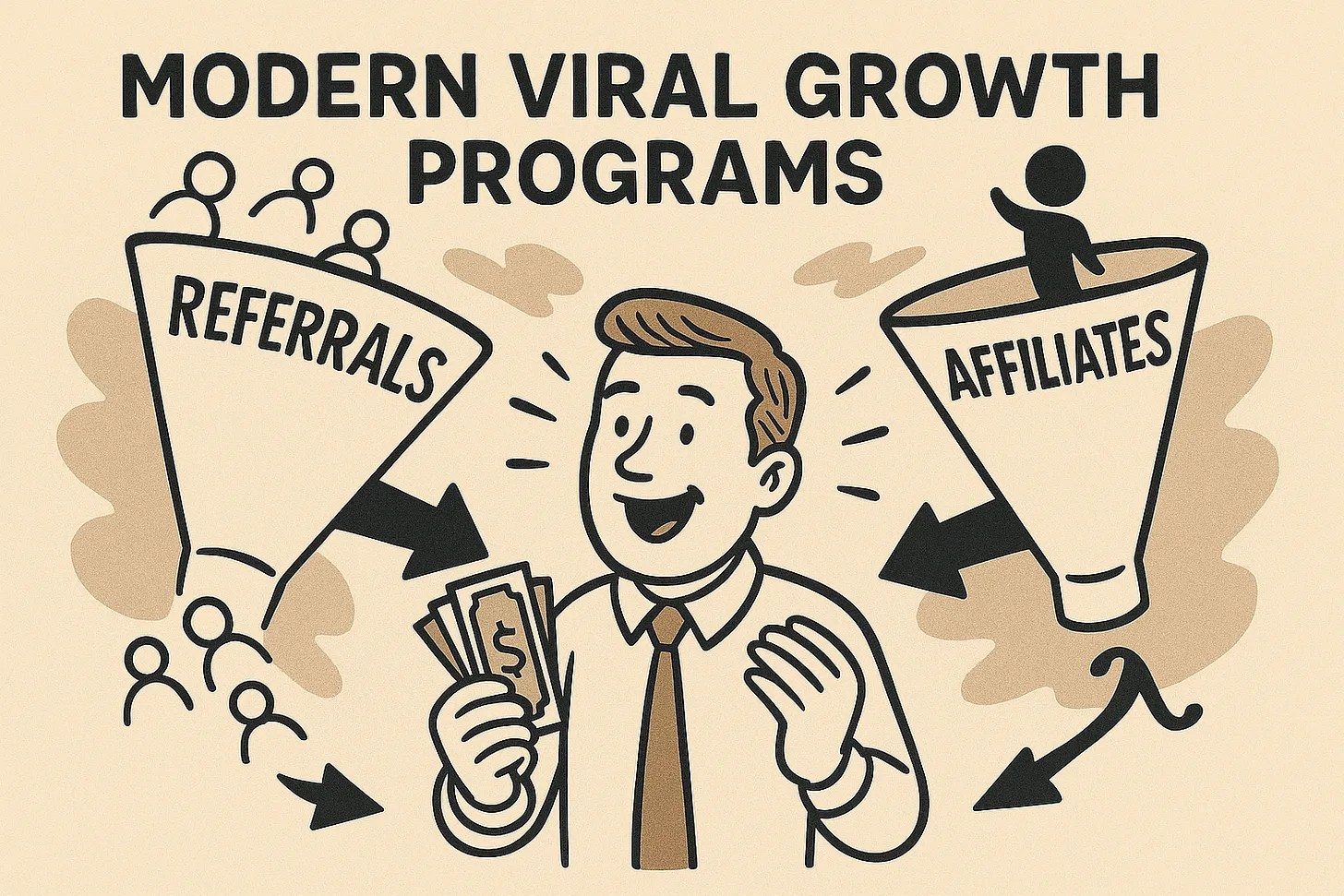
Traditional viral growth delivers traffic, not real traction. Attention might be there, but intent is not. Meanwhile, referrals and affiliate programs are quietly doing what virality never could: scale with engineer-like precision.
Why referrals and affiliates are thriving
Trust is the new viral growth engine.
Affiliates and influencers now impact up to 88% of purchase decisions, whether users discover the product through them or use them to validate a choice. Trust doesn’t just drive adoption, it also improves the quality of your leads. Customers acquired through referrals have 16% higher LTV, according to Wharton’s research.
The reason is simple, and very human: these programs rely on someone you personally trust telling you to do something. They’re like word of mouth, except that they’re structured and have very clear attribution.
That structure is what makes referrals and affiliates so powerful and allows us to treat them as a performance channel. You can track CAC, test incentives, and model payback, just like with paid ads. The economics are embedded in the system, meaning that you’re building ROI into the program itself through incentive design.
Except that, unlike ads, you’re not buying attention and low-intent users. Because these programs sit at the very end of AARRR, Referral, they don’t pull in low-intent traffic. They bring in people who look like your best users.

 @sandydiao